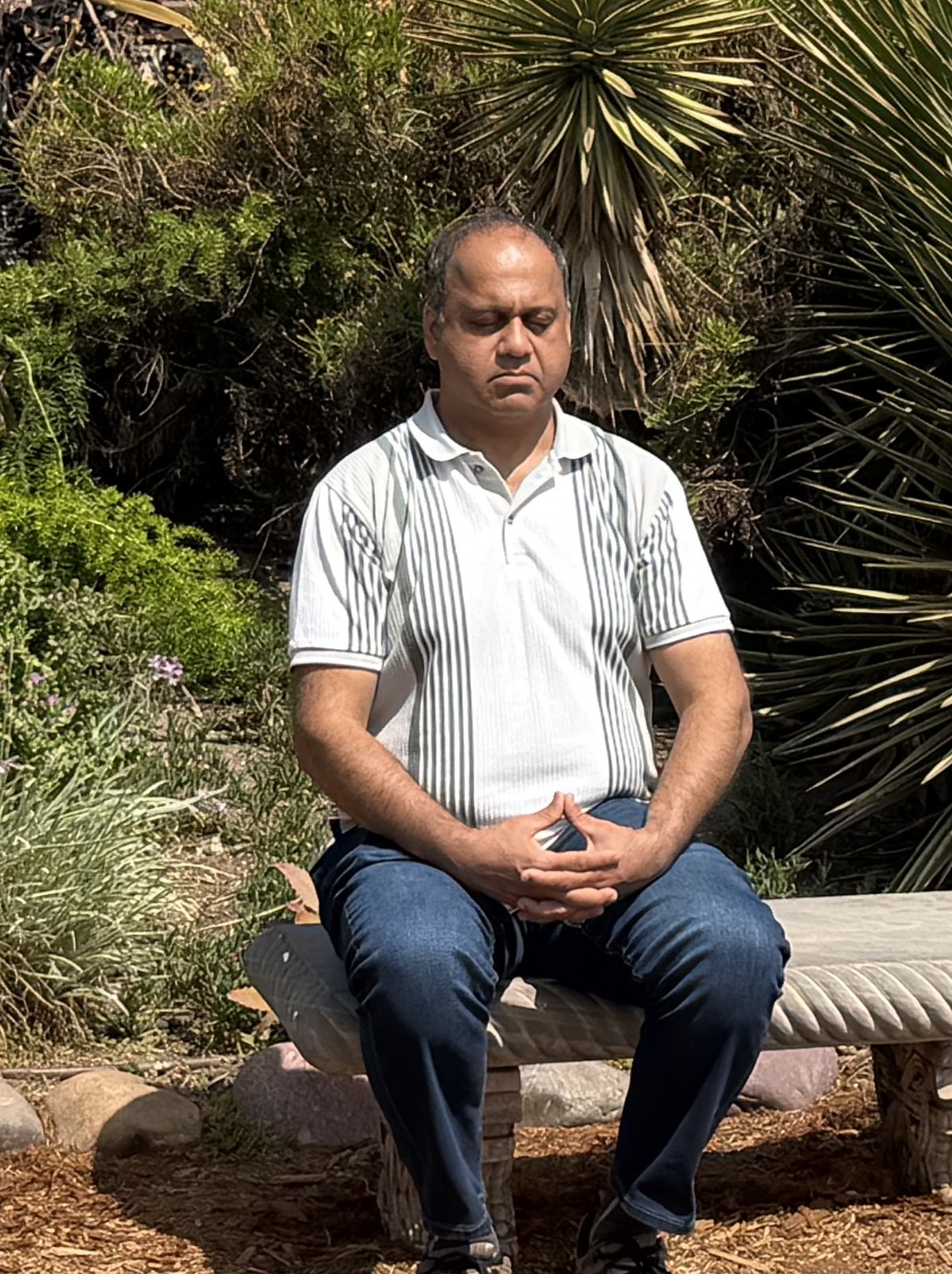
In the age of speed, virtuality and thrills, the only path left to intelligent humans who wish to evolve is questioning — questioning your own fictitiousness.
Be the first to know when the book launches — no spam, just the release.
Anant introduces the Fictitious I, the PVM structure, and what the book asks of you.
A Preface, two Forewords, an Introduction, seven pillar chapters, and the Fifty-Two Questions. Many of the questions are presented in four parts: the Question itself, Anant's Musing, his Expression, and Going Deeper. Your expression is the one that matters.
The seven longer chapters. Read in order, or selectively, when a question sends you searching.
If the voice lands with you, the rest of the book will.
A few decades of living in the modern age accumulates a great deal of information about our own selves! Quite a bit tends to be borrowed: from books, from people, from work, from culture, from algorithms. Information, even if it be about our own self, feels like power while it is being collected, but is found to be less helpful when a real life situation arrives.
What helps though is a real life question, a question that refuses to be answered with the borrowed material, but which acts as a searchlight in the deep fog before our eyes caused by the life challenge, with our own deep contemplation guided by this light paving the way to clarity and a slow but sure resolution of the situation.
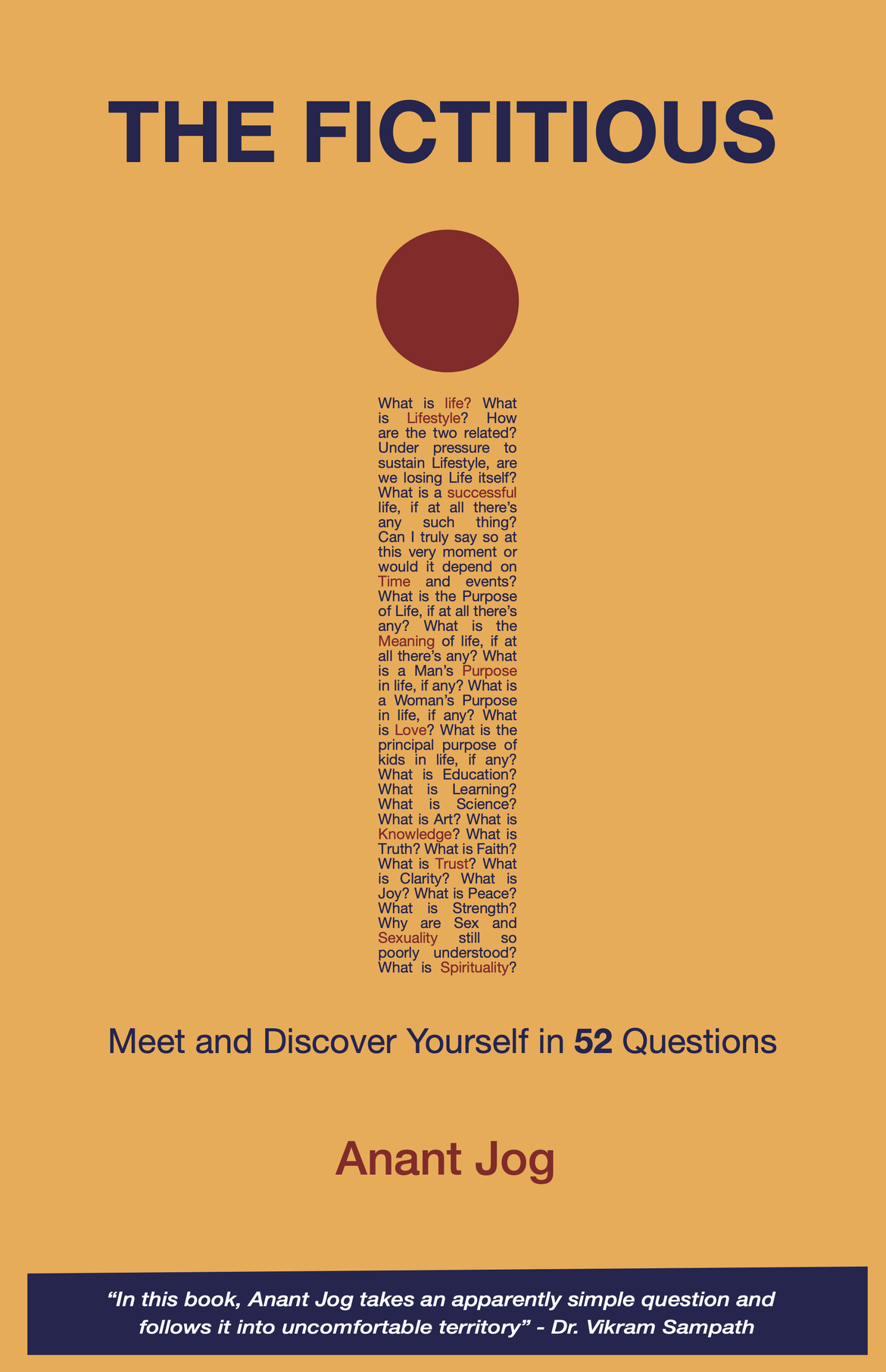
Fifty-two such questions are the architecture of this book. They are not intellectual puzzles. They have been chosen, over many years, for one quality, that they cannot be answered casually, but anyone who sits with them honestly, will find them interesting, challenging and urging the person to rethink his understanding about it.
I believe that in the modern age, almost defined by but also consumed by high speed, technology, virtuality, wealth, enjoyments and thrills, the one path left to intelligent humans who wish to progress in life is questioning, questioning your own beliefs.
Such is the mosaic within which the questions shall appear. The questions are not gentle. They are also not unkind. They cannot be approached or resolved with what is already known, that’s all.
Incarcerating it feels in the Beginning
Biting Loneliness feeds on Infirmity
Self-Pity locks hands with Frustration
The Tunnel of Day Long and Empty…
Yet the Flint of Silence starts Working
Striking the Cold Dark Rocks of Inaction
Little by Little it sets them to Motion
Teaching them the Art of Self Concentration…
Twelve hours, unabridged, no music, no production polish — the same direct voice as the book.
Fifty-two questions to sit with. Not to be answered intellectually — to be lived with, re-visited, written down in your own words.
A school prize in the eighth grade — a small collection of a young yogi’s lectures — was the unlikely beginning of Anant Jog’s lifelong inquiry. The book closed; the feeling it left did not. An inner emptiness, inexplicable but persistent, became the driving force of every direction his life would take.
For twelve long and arduous years, Anant remained under his master’s tutelage, undergoing the practices in their full rigour. They helped strengthen the seeking.
What emerged was not a new philosophy but a single, integrated, rational framework: the PVM-Structure as the unit of existence; the Fictitious I as the central misidentification; the distinction between Life and Lifestyle; the Human plane; the Cosmic Will and Intellect; and Pain Navigation as the practical method. The Fictitious I is the distillation of that work.
Truly a spiritual framework for the modern times.
Simplest and Best Explanation of Ego.
A short letter from Anant, every other Sunday. New questions, new poems, occasional video. No spam, no funnels.
No. The book deliberately removes religious framing, borrowed jargon, and references to any specific tradition. It is written for any sincere reader of any background. The method is purely rational analysis, observation, and practice — and the questions themselves are universal.
Neither, by the author's own framing. Anant has spent over ten years removing spiritual jargon and refuses to introduce new philosophy or theory. The book is a method — purely rational analysis and observation, then step-by-step practice. A completely self-reliant method.
Most books on the Self either (a) tell you there is a true Self under the false one, or (b) tell you to drop the Self altogether. This book does neither. It asks you to see that the "I" is a memory, and to work — not transcend, work — with the PVM structure you actually are.
Physical, Vital, Mental — but not three parts added together. The book treats the PVM as one indivisible unit: the Physical is the body in its biochemical sweep, the Vital is the senses, breath and life-force, the Mental is thought, sentiment and emotion. The Introduction establishes it, a full chapter takes it up at depth, and the Fifty-Two Questions use it as the canonical vocabulary.
The body of the book is fifty-two foundational questions on Life, Lifestyle, Love, Action, Sleep, Sex, Suffering, Silence, Fitness, Youth, and Home, and more. Many are presented in four parts: the Question, Anant's Musing that led to it, his Expression, and Going Deeper. Yours is the expression that matters — sat with, written down in your own words.
Yes — read by the author. It will be available on Audible, Apple Books, and Spotify when the audiobook launches. Join the release list above to be notified.